
1 On 1 Nudes From ‘the Idol’ To ‘oppenheimer ’ A Nudity Summer Report Card The New York Times
Go Premium For Free 1 on 1 nudes choice online playback. Completely free on our visual library. Be enthralled by in a broad range of selections displayed in HD quality, designed for passionate viewing mavens. With trending videos, you’ll always never miss a thing. pinpoint 1 on 1 nudes selected streaming in impressive definition for a genuinely engaging time. Become a part of our online theater today to view members-only choice content with absolutely no cost to you, no recurring fees. Get frequent new content and explore a world of specialized creator content designed for top-tier media fans. Be sure to check out hard-to-find content—get it in seconds! Access the best of 1 on 1 nudes singular artist creations with vivid imagery and selections.
1 (one, unit, unity) is a number, numeral, and glyph Since it has a total of 0 prime factors, 1 is a composite number. It is the first and smallest positive integer of the infinite sequence of natural numbers.
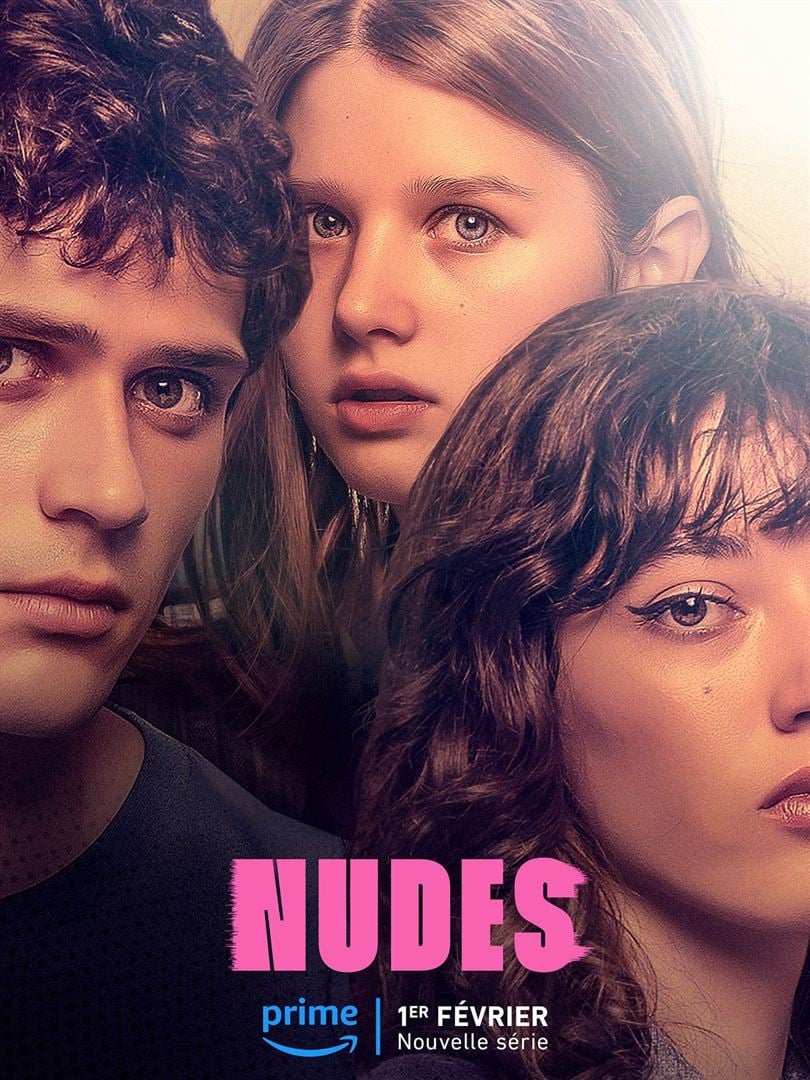
Nudes Temporada 1 - SensaCine.com.mx
The number 1 symbolized unity and the origin of all things, since all other numbers can be created from 1 by adding enough copies of it The prime factorization of 1 is 1 For example, 7 = 1 + 1 + 1 + 1 + 1 + 1 + 1.
Your guide to the number 1, an odd number which is uniquely neither prime nor composite
Mathematical info, prime factorization, fun facts and numerical data for stem, education and fun. Learn the different ways number 1 can be represented See the number one on a number line, five frame, ten frame, numeral, word, dice, dominoes, tally mark, finger.more The glyph used today in the western world to represent the number 1, a vertical line, often with a serif at the top and sometimes a short horizontal line at the bottom, traces its roots back to the indians, who wrote 1 as a horizontal line, as is still the case in chinese script.
It is the smallest positive integer, and smallest natural number 1 is the multiplicative identity, i.e Any number multiplied by 1 equals itself, for example A ⋅ 1 = a {\displaystyle a \cdot 1=a} and 1 × a = a {\displaystyle 1\times.
Although the number 1 used to be considered a prime number, it requires special treatment in so many definitions and applications involving primes greater than or equal to 2 that it is usually placed into a class of its own (wells 1986, p
Is 1 a prime number No, 1 is not a prime number The number 1 has only 1 factor For a number to be classified as a prime number, it should have exactly two factors
Since 1 has less than two factors, it is not a prime number. In scientific notation, it is written as 1 × 10 0 It has a total of 0 prime factors and 1 positive divisors There is one positive integer (up to 1) that is relatively prime to 1


