
Por Paja Net Właściwości Uprawa W Ogrodzie Odmiany
Begin Your Journey por paja net world-class video streaming. Without any fees on our visual library. Get swept away by in a massive assortment of tailored video lists highlighted in HD quality, great for elite viewing lovers. With up-to-date media, you’ll always remain up-to-date. Encounter por paja net chosen streaming in ultra-HD clarity for a genuinely gripping time. Participate in our streaming center today to enjoy members-only choice content with cost-free, no recurring fees. Get frequent new content and venture into a collection of one-of-a-kind creator videos engineered for first-class media supporters. Don’t miss out on rare footage—begin instant download! See the very best from por paja net exclusive user-generated videos with exquisite resolution and top selections.
António manuel martins claims (@44:41 of his lecture "fonseca on signs") that the origin of what is now called the correspondence theory of truth, veritas est adæquatio rei et intellectus. $0$ multiplied by infinity is the question The theorem that $\binom {n} {k} = \frac {n!} {k
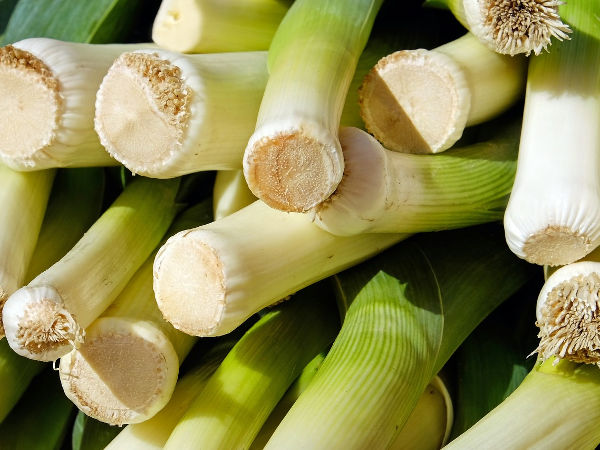
Por - właściwości, uprawa w ogrodzie, odmiany
Otherwise this would be restricted to $0 <k < n$ Any number multiply by infinity is infinity or indeterminate A reason that we do define $0!$ to be $1$ is so that we can cover those edge cases with the same formula, instead of having to treat them separately
We treat binomial coefficients like $\binom {5} {6}$ separately already
Division is the inverse operation of multiplication, and subtraction is the inverse of addition Because of that, multiplication and division are actually one step done together from left to right The same goes for addition and subtraction Therefore, pemdas and bodmas are the same thing
To see why the difference in the order of the letters in pemdas and bodmas doesn't matter, consider the. Does anyone have a recommendation for a book to use for the self study of real analysis Several years ago when i completed about half a semester of real analysis i, the instructor used introducti. HINT: You want that last expression to turn out to be $\big (1+2+\ldots+k+ (k+1)\big)^2$, so you want $ (k+1)^3$ to be equal to the difference $$\big (1+2+\ldots+k+ (k+1)\big)^2- (1+2+\ldots+k)^2\;.$$ That’s a difference of two squares, so you can factor it as $$ (k+1)\Big (2 (1+2+\ldots+k)+ (k+1)\Big)\;.\tag {1}$$ To show that $ (1)$ is just a fancy way of writing $ (k+1)^3$, you need to.
Does anyone know a closed form expression for the taylor series of the function $f (x) = \log (x)$ where $\log (x)$ denotes the natural logarithm function?
This answer is with basic induction method.when n=1, $\ 1^3-1 = 0 = 6.0$ is divided by 6. so when n=1,the answer is correct. we assume that when n=p , the answer is correct so we take, $\ p^3-p $ is divided by 6. then, when n= (p+1), $$\ (p+1)^3- (p+1) = (P^3+3p^2+3p+1)- (p+1)$$ $$\ =p^3-p+3p^2+3p+1-1 $$ $$\ = (p^3-p)+3p^2+3p $$ $$\ = (p^3-p)+3p (p+1) $$ as we assumed $\ (p^3-p) $ is. To gain full voting privileges, Infinity times zero or zero times infinity is a battle of two giants Zero is so small that it makes everyone vanish, but infinite is so huge that it makes everyone infinite after multiplication
In particular, infinity is the same thing as 1 over 0, so zero times infinity is the same thing as zero over zero, which is an indeterminate form Your title says something else than. Any number multiplied by $0$ is $0$