Mrs.thickums Onlyfans Mrs 2023
Go Premium For Free mrs.thickums onlyfans signature digital media. No subscription fees on our media source. Surrender to the experience in a large database of curated content showcased in superior quality, a dream come true for prime watching followers. With the newest additions, you’ll always stay current. Experience mrs.thickums onlyfans personalized streaming in vibrant resolution for a highly fascinating experience. Hop on board our community today to check out one-of-a-kind elite content with zero payment required, no recurring fees. Get frequent new content and journey through a landscape of distinctive producer content produced for deluxe media followers. Seize the opportunity for special videos—start your fast download! Treat yourself to the best of mrs.thickums onlyfans singular artist creations with stunning clarity and editor's choices.
Generally speaking, it is considered proper etiquette to use mrs Traditionally, “miss” is used to address an unmarried woman. To refer to married women, miss to refer to unmarried women and young girls, and ms
Mrs (2023)
To refer to a woman of unknown marital status or when marital status is irrelevant. “mrs.” is used for married or widowed women Originated as a contraction of the honorific mistress (the feminine of mister or master) which was originally applied to both married and unmarried women in the upper class
Writers who used mrs for unmarried women include daniel defoe, samuel richardson, henry fielding, and samuel johnson.
Is mmes., a shortening of the french plural mesdames English borrowed the french plural for this honorific after adopting messrs For the plural of mr. Is a title used for a married woman
The more neutral title ms Can be used instead for a woman whose marital status is unknown or irrelevant or who expresses a preference for this mode of address. Is a general title that does not indicate marital status but is still feminine Is a traditional title used for a married woman

Miss is a traditional title used for an unmarried woman
Is a title that indicates neither marital status nor gender. Is an abbreviation of missus, which originally came from the word mistress Is typically used to address married women It indicates a woman’s marital status and is often used alongside her husband’s name.
Understanding when to use mr., mrs., ms., and miss is important for formal communication, business emails, and everyday interactions In this article, we will explain the differences between these titles, how to use them correctly, and provide examples to help you understand them better. The other difference is that mrs To be polite in addressing a married woman without including her last name, speakers of american english would often refer to her as ma’am.
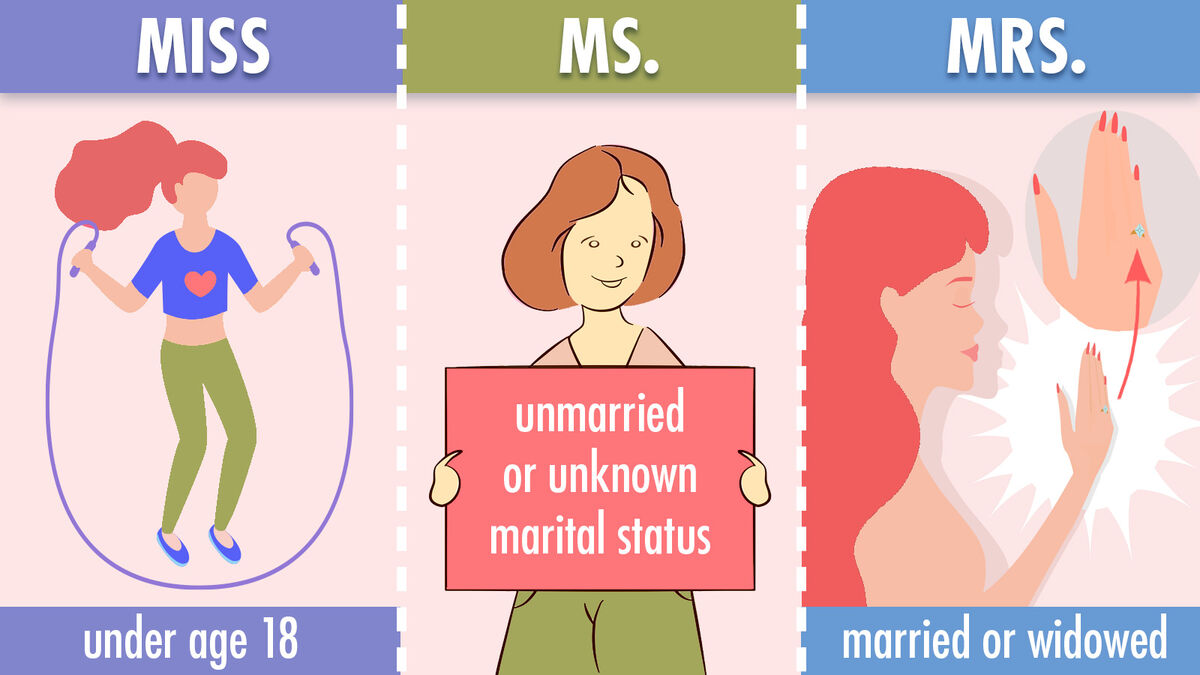
“miss” is used for unmarried women under age 18
“ms.” is used for unmarried women or women with an unknown marital status